Best Home Workout Equipment: What’s Worth Buying (Pros & Cons)
You don’t need a garage gym. These five pieces of kit cover most home training needs; here’s who each is for and what to watch out for.
Quick picks by goal
| Goal | Start with | Why |
|---|---|---|
| Build muscle at home | Adjustable dumbbells | Progressive overload in one compact package |
| Tight budget / travel | Resistance bands | Cheap, portable, joint-friendly |
| Strength + cardio | Kettlebell | Swings, goblet squats and carries |
| Back and arms | Pull-up bar | One of the best upper-body exercises |
| Floor work, stretching | Exercise mat | Comfort and grip |
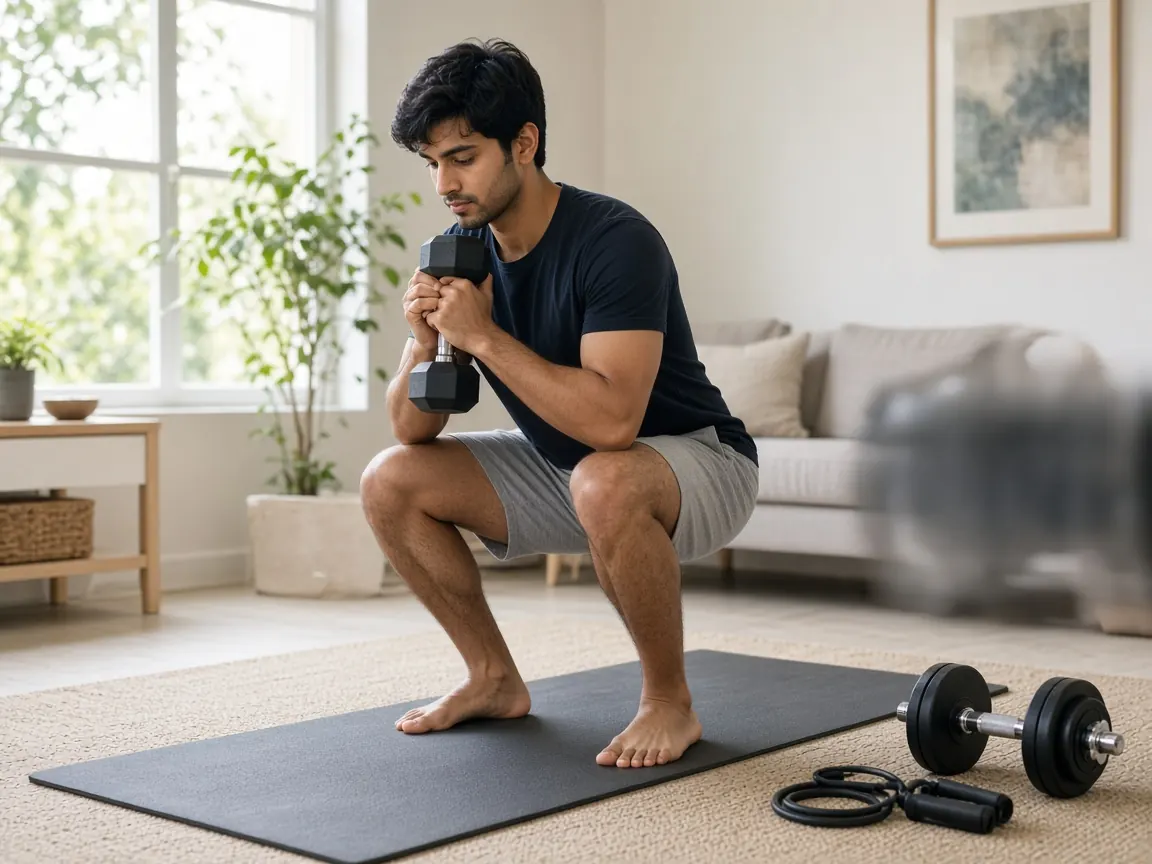
Adjustable dumbbells
👍 Pros
- Replace a whole rack of weights
- Great for progressive overload
- Space-saving
👎 Cons
- Costly compared with fixed dumbbells
- Changing weights takes a few seconds
- Check the maximum weight; beginners outgrow light sets quickly
Adjustable dumbbells (example: Bowflex SelectTech 552)
A well-known dial-style set; compare weight range and warranty with alternatives.
Affiliate link coming soonA well-known dial-style set; compare weight range and warranty with alternatives.
Resistance bands
👍 Pros
- Very cheap and portable
- Easy on joints
- Good for warm-ups, rehab and travel
👎 Cons
- Resistance changes through the range (harder at the top)
- Hard to measure progress
- Cheap bands can snap; inspect regularly
Loop and tube resistance bands set
Choose a set with several resistance levels and a door anchor.
Affiliate link coming soonChoose a set with several resistance levels and a door anchor.
Kettlebell
👍 Pros
- One tool for strength and conditioning
- Compact and durable
👎 Cons
- Needs technique (learn the hip hinge first)
- One fixed weight limits progress
Cast-iron or vinyl kettlebell (8–16 kg for most beginners)
Smooth handle and flat base matter more than brand.
Affiliate link coming soonSmooth handle and flat base matter more than brand.
Pull-up bar
👍 Pros
- Excellent for back and biceps
- Cheap and effective
👎 Cons
- Needs a sturdy door frame or wall mount; check the fit
- Beginners may need assistance bands
Doorway or wall-mounted pull-up bar
Check door-frame compatibility and weight rating.
Affiliate link coming soonCheck door-frame compatibility and weight rating.
Exercise mat
👍 Pros
- Comfort for floor exercises
- Non-slip surface
👎 Cons
- Thin mats aren’t enough for heavy lifting
Non-slip exercise mat (8 mm or thicker)
A thicker mat helps with joints; check material and smell reviews.
Affiliate link coming soonA thicker mat helps with joints; check material and smell reviews.
Before you buy
- Measure your space and ceiling height.
- Pick the one item that matches your main goal.
- Check weight capacity and return policy.
- Check with a doctor if you have injuries or health conditions.
How to read the product examplesThese are well-known products that match the criteria above, shown as starting points, not tested rankings. We have not lab-tested them and we don't show prices or star ratings that we can't verify. Formulas change, so check the current label before buying.
FAQs
Can I build muscle at home?
Yes, if you progressively increase difficulty (more weight, reps or harder variations) and eat enough protein.
What is the minimum equipment I need?
A set of resistance bands or a pair of adjustable dumbbells plus a mat is enough to start.
How often should I train?
Many beginners do well with 2–4 sessions per week, with rest days between sessions for the same muscles.
Health disclaimerThis article is for general information, not medical advice. Talk to a doctor, pharmacist or dermatologist before starting supplements, retinoids or a new exercise programme, especially if you are pregnant, breastfeeding, have a medical condition or take medication.